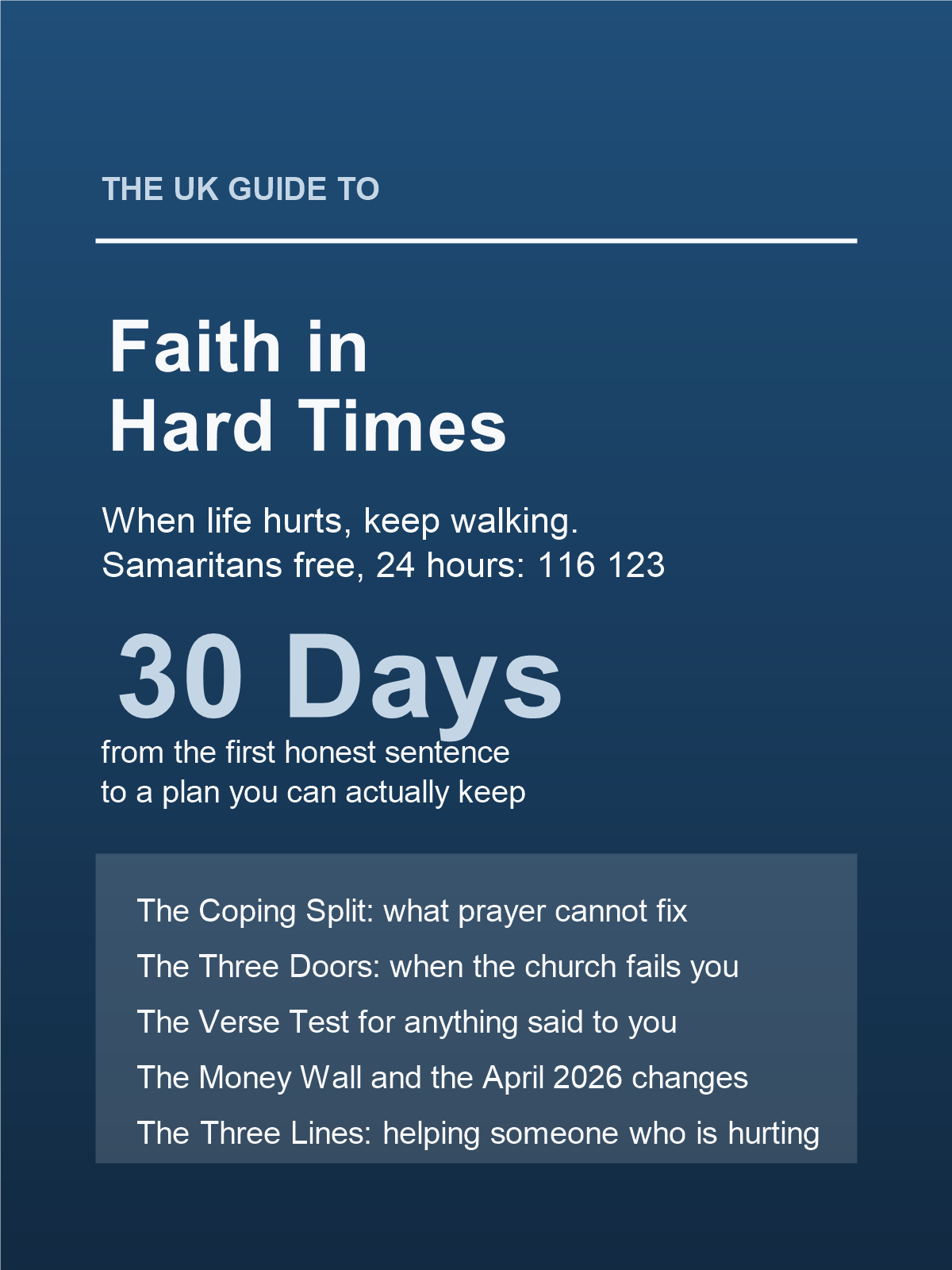
The UK Guide to Faith in Hard Times: When Life Hurts
When life hurts, most people are not short of encouragement. They are short of a method. This guide gives you one — and it opens with the research finding most religious advice about suffering leaves out: in a meta-analysis of 42 studies and 25,438 people across 24 countries, only negative religious coping (blame, punishment, retribution, being unable to see any meaning) reliably tracked with worse anxiety and low mood. Positive religious coping showed no reliable benefit on its own, and in younger and female samples it went the other way. So the honest headline is this: prayer does not automatically lower distress, and the way you pray can raise it. It also takes seriously the fact that 37.2 per cent of people in England and Wales now say they have no religion — so this book is written for believers, for the uncertain, and for people who have already stopped believing, and it asks nothing of you except honesty. Ten chapters, seven named frameworks: the Coping Split, the Three Layers, the Complaint, the Verse Test, the Faith-and-Money Wall, the Community Test, the Three Doors, the Doubt Ladder and the Three-Line Response. You will find out what the research actually found about prayer and distress, how to separate the event from the story you built on it and from the sleep you have lost, what to do when you are angry at God, how to handle the three verses that do more harm than good, where to get help when money is the problem — including the Universal Credit changes from 6 April 2026 — who to tell, what to do when the church is the thing that failed you, and what to actually say to someone who is hurting. Ends with a day-by-day 30-day plan. Every figure and every crisis helpline was checked against its original source on the day of publication — including the fact that Papyrus, which ran HOPELINE24/7 for thirty years, went into administration in September 2026 and its service has stopped. For anyone in Britain who is hurting. By PracticaleBooks.com.
- Price
- £4.99
- Format
- Instant digital download
- Published
Opens the secure checkout in a new tab. Instant access after payment.
What's inside
- The Coping Split: five questions that sort what you are actually doing into comfort-seeking and blame-finding — and why blame inside religion is the one pattern the research links to worse mental health.
- The research, stated honestly: across 42 studies and 25,438 people, positive religious coping showed no reliable overall benefit while negative religious coping reliably predicted worse symptoms. What it means, and what it does not mean.
- The Three Layers: event, story, body. Six questions that separate what happened from what you decided it meant and from what it is doing to your sleep, appetite and concentration — and why the body goes first.
- The Complaint: five moves for praying when you are angry at God, including naming what you actually wanted, admitting the doubt without apologising, and the final step that turns a grievance into a prayer.
- The Verse Test: four questions for anything said to you at a funeral — and what 'everything happens for a reason', the misapplied 1 Corinthians 10:13, and Romans 8:28 actually say.
- The Faith-and-Money Wall: four walls — money you are owed, money you can get, money you cannot pay, and money you give — plus Citizens Advice's two lines and the shame test that shows whether your community would actually help.
- The Universal Credit changes from 6 April 2026: allowances from £338.58 to £666.97, the two-child limit gone, and the health element split so new claimants get £217.26 where protected ones keep £429.80, frozen to 2029/30.
- Who to tell: six questions that test any community, why 'is there someone who would be there for you?' is 96 per cent for Christian adults in England but 91 per cent for adults with no religion, and how to build one if you have none.
- The Three Doors: person, institution, state body — what to do when the community that was meant to support you is the problem, the records you must keep, and when to go straight to the police.
- The Doubt Ladder: five rungs from 'peaceful, I do not mind' to 'angry, and the evidence is good', written for the 37.2 per cent who report no religion and who most books about faith never address.
- The Three-Line Response: what to actually say to someone who is struggling, the warning signs that mean risk rather than sorrow, and how to ask directly about suicide without planting the idea.
- The 30-day plan, day by day, from three lines to one person on day one to a one-page written verdict on day 27 — plus a one-page plan, a 15-term glossary and eight verified sources.
How you get it
- Pay securely through Payhip, the store that processes every order.
- The download link is emailed to you the moment payment clears.
- A PDF, readable on any phone, tablet or computer.