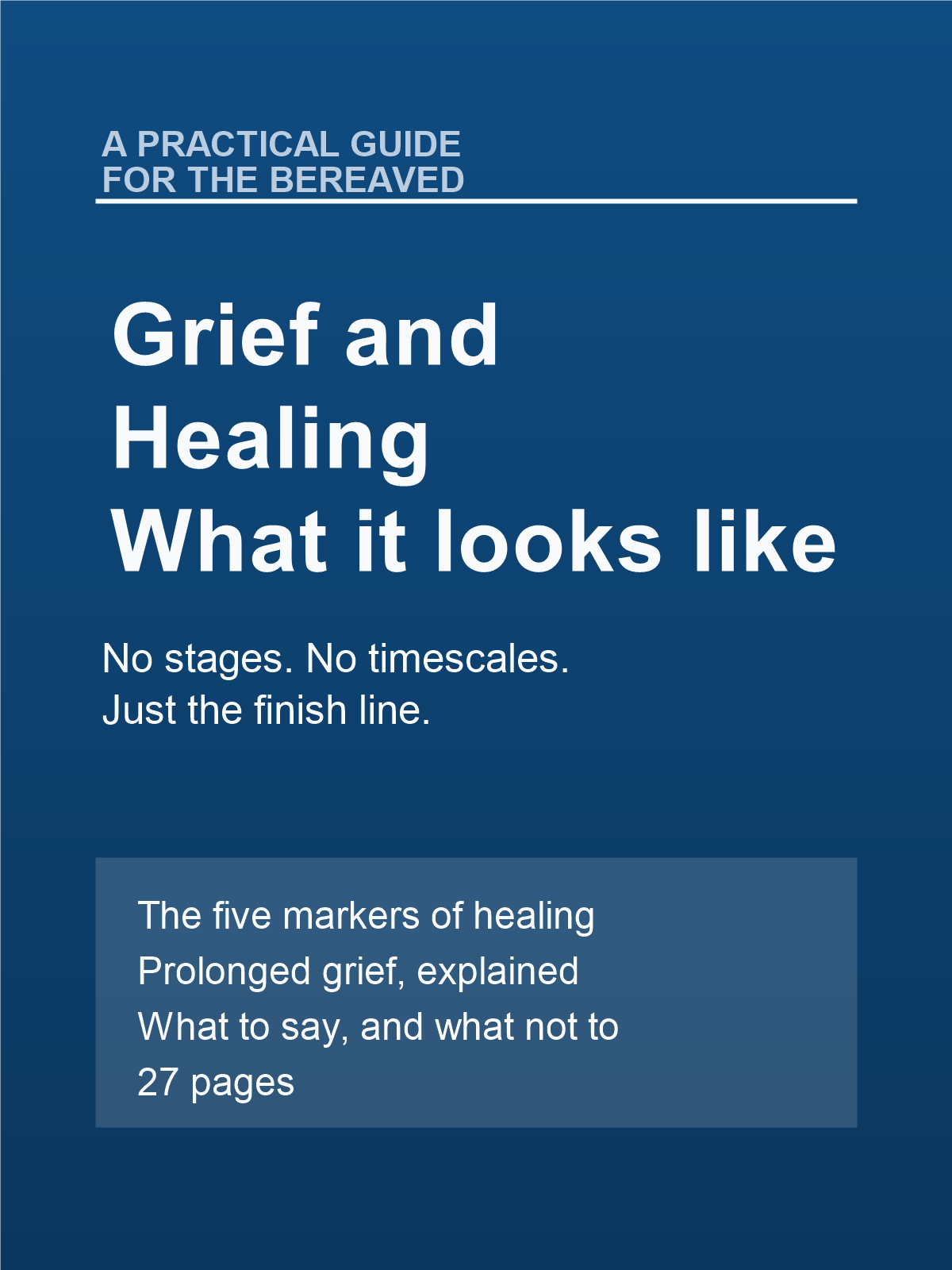
Grief and Healing: What Healing Actually Looks Like
Nobody tells you what the end of grief looks like. Everyone has an opinion about how long it takes, almost all of those opinions are wrong, and none of them describe the finish line. This guide does: the five observable markers that mean healing has actually happened, the wave pattern that says you are moving even when you are not sure you are, and the work that does most of the work. Grief versus depression, prolonged grief disorder in plain English, the harder losses, and what to say to someone who will not talk about it.
- Price
- £4.99
- Format
- Instant digital download
- Published
Buy now
Opens the secure checkout in a new tab. Instant access after payment.
What's inside
- The five markers of healing - the part nobody else describes. Predictable waves, a story you can tell in order, a relationship that changed rather than ended, room for new things, and grief as one thing among several rather than the lens.
- Why the five stages of grief are the most repeated and least supported thing ever said about bereavement, what they got wrong, and the progress bar they install that makes month eight worse than month one.
- Grief is a wave, not a staircase: how the waves go from arriving unannounced to arriving on a Wednesday afternoon - and why predicting them, not feeling happy, is the real test.
- The four trajectories of grief, so you can find yours and stop comparing your timeline with someone else's: resilience, recovery, chronic, and delayed.
- Healing is not forgetting, is not not-crying, is not feeling good, is not closure, and is not on a schedule - with the specific damage each of those beliefs causes.
- Continuing bonds: why severing the tie was the wrong advice for twenty years, how to build the bond deliberately instead of at 2am with your phone, and the inherited practice you do their way on purpose.
- The work, in order: telling the story out loud to one person, letting the wave run to its end instead of fleeing it, the fixed wake time, and the one weekly commitment that does more than it looks.
- Grief versus depression - the difference that is actually testable, and a printable check to turn a vague feeling into a sentence your GP can work with.
- Prolonged grief disorder in plain English: the 12-month criteria, a 9.8% prevalence rising to 14% in bereaved cancer families, the risk factors, and what to ask your GP for by name.
- The harder losses: suicide (65% more likely to attempt it themselves, a one-in-ten absolute risk), violent death, the death of a child, stillbirth, disenfranchised grief and ambiguous loss.
- Helping someone who is grieving: the six things not to say, six replacements, what to actually do rather than feel, and how to reach someone who will not talk.
- Free UK support with real phone numbers - Samaritans, Cruse, Child Bereavement UK, The Compassionate Friends, SANDS, MISS, Papyrus - plus 8 printable tools.
How you get it
- Pay securely through Payhip, the store that processes every order.
- The download link is emailed to you the moment payment clears.
- A PDF, readable on any phone, tablet or computer.